
Insurance and Safety at Covent Garden Skip Hire
Covent Garden Skip Hire operates as a fully insured rubbish company, prioritising safety and legal compliance across every job. We combine comprehensive public liability cover with rigorous staff training and a formal risk assessment process to protect our customers, the public and our team. Our approach makes sure you are working with an insured waste company that treats safety as an operational cornerstone rather than an afterthought. Insurance and proactive safety management are embedded in our day-to-day practice to reduce on-site incidents and ensure lawful waste handling.Public Liability Insurance and Coverage
As an insured skip hire and rubbish disposal contractor we maintain robust public liability insurance to protect against third-party injury and property damage. Our policy limits are selected to reflect the scale and scope of our operations, covering typical risks associated with skip delivery, collection, loading and leaving a skip on public highways or private property. This cover extends to accidental damage and bodily injury, and our insurance documentation is kept current so clients can be confident they are dealing with a fully protected, insured rubbish removal company.
What Our Public Liability Means for You
When you use an insured rubbish company like Covent Garden Skip Hire, public liability insurance means that claims arising from our operations are handled professionally and by our insurer. We ensure that subcontractors are required to match or be covered by our standard of insurance. The result is a single point of accountability: if there is an incident caused by our skip placement, loading or employee activity, the claim is responded to under the policy, giving property owners and businesses peace of mind.Staff Training and Competency
Our workforce is trained to industry standards and receives continual professional development to maintain the highest levels of competency. Staff training covers safe manual handling, traffic management for roadside skip placement, correct loading techniques, hazardous waste recognition and segregation, and emergency procedures. We document training records and competency checks for each team member so that every operative on site is qualified to represent our insured waste company safely and efficiently.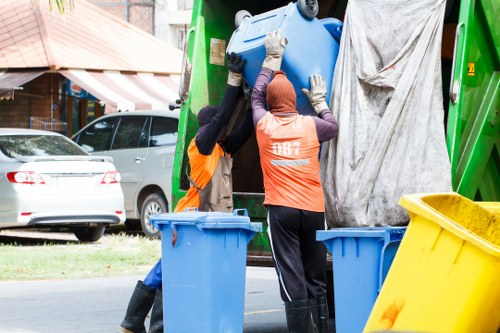 We apply a layered training model with on-boarding induction, practical shadowing, and regular refresher sessions. Toolbox talks before each shift reinforce site-specific risks and control measures. Training encompasses both theoretical knowledge and practical skill assessments: operatives demonstrate correct use of lifting equipment, safe stacking in skips, and adherence to the Waste Duty of Care. Our training regime ensures that our insured skip hire teams consistently meet regulatory and client expectations.
Personal Protective Equipment (PPE)
Personal protective equipment is mandatory for all Covent Garden Skip Hire personnel. PPE is selected based on risk assessment and includes hi-visibility clothing, safety boots, gloves, eye protection, and respiratory protection when encountering dusty or chemical loads. We enforce PPE use through supervision and audits and provide replacements as needed. PPE is considered one layer within our broader control strategy and is combined with safe systems of work to minimise the likelihood of injury.Our Risk Assessment Process
Our risk assessment process is systematic and repeatable, designed to identify hazards, evaluate risks and implement proportionate controls. Each job begins with a pre-start review: site access, traffic interaction, pedestrian flows, overhead or underground utilities and environmental constraints are recorded. We assess the nature of the waste to be handled, noting any potential hazardous substances and the need for specialist handling or licensing. The outputs define the safe systems of work, necessary PPE and any permits required to complete the task safely.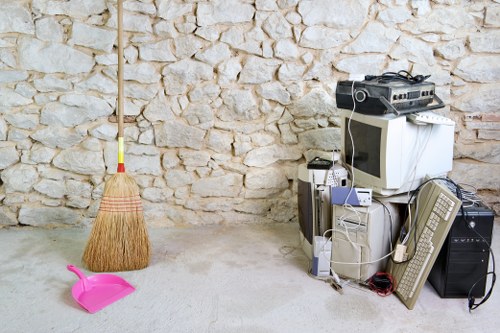 The risk assessment steps include:
- Site reconnaissance: visual inspection and photographic record.
- Hazard identification: manual handling, vehicle movement, dust, asbestos risk, chemical spillage.
- Risk evaluation: likelihood and consequence scoring to prioritise controls.
- Control measures: traffic management plans, exclusion zones, mechanical aids, segregation procedures and emergency response arrangements.
- Monitoring and review: post-task checks and updates to risk assessments when conditions change.
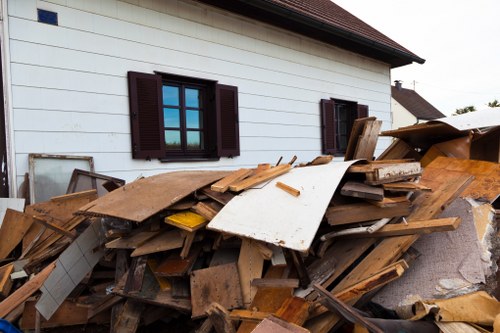 We also maintain an incident reporting and investigation framework so that any near-miss or accident yields lessons learned. Investigations focus on root causes and corrective actions, such as additional training, revised procedures or changes to equipment. This continuous improvement cycle supports our status as an insured skip hire provider with a strong safety culture and measurable performance metrics.